
Custom cotton tote bags are reusable, personalized carriers made from woven cotton fabric and printed or embroidered with logos, artwork, or text for branding and promotional use. The industry term for the most common version is “cotton canvas tote,” referring to a plain-weave fabric that holds print detail well and withstands daily use. Businesses order cotton tote bags custom for trade shows, retail packaging, and corporate gifting. Consumers buy them for sustainable fashion and everyday carry. The right bag combines verified eco credentials, the correct fabric weight, and a print method matched to your design. This guide covers all three.
What customization options are available for cotton tote bags?
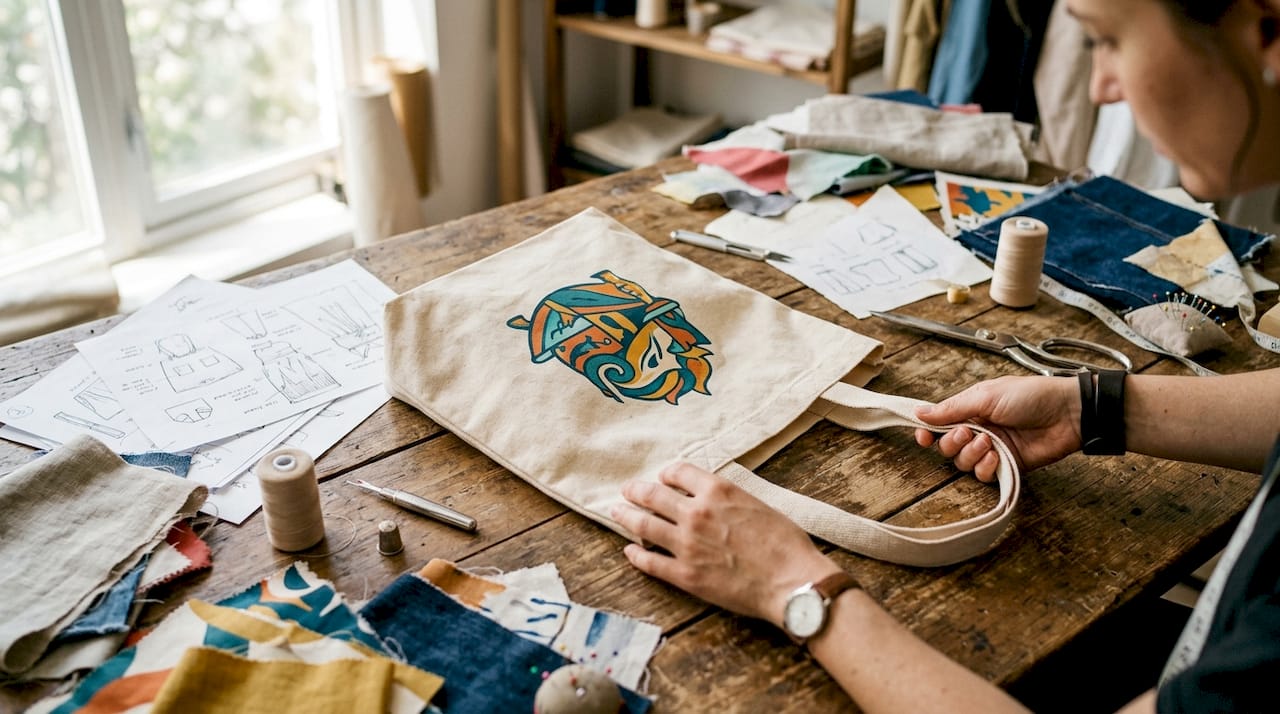
Three print methods dominate the custom cotton tote market: screen printing, direct-to-film (DTF), and embroidery. Each suits a different design type and budget.
- Screen printing is the standard for single-color or two-color bulk logos. It delivers sharp, durable results at low cost per unit and holds up through repeated washing.
- Direct-to-film (DTF) transfers a full-color printed film onto the fabric. It works well for multicolor artwork and photographic designs, though digital imprint areas are limited to roughly 6x3.5 inches on most standard bags.
- Embroidery adds a premium, tactile finish. It suits logos with clean lines and limited colors. Embroidery costs more per unit and is less practical for large print areas.
Color and size options vary widely. Most suppliers offer natural, black, navy, and red as standard colors. Bag sizes range from small 10x12-inch styles up to large 15x16-inch grocery totes. Custom sizes are available at higher MOQs.
Design clarity depends on fabric texture. Simple, high-contrast logos perform better on cotton canvas than complex photographic designs. The weave of cotton canvas limits fine detail reproduction, so bold graphics and clean typography always read better than intricate illustrations.
Minimum order quantities (MOQs) typically start at 50 units for logo printing. Lead times run from 4 days for express orders up to 15 days for large corporate runs. Plan your timeline accordingly if you need bags for a specific event date.
Pro Tip: Request a digital proof before approving bulk production. Digital mock-ups catch print alignment and color issues before they become expensive mistakes across hundreds of units.
How does material quality affect durability and feel?
Fabric weight, measured in grams per square meter (GSM), is the single most important spec to check when ordering personalized cotton totes. GSM determines how a bag feels in hand, how much it holds, and how long it lasts.
Lightweight vs. premium cotton canvas
A 150gsm bag is thin and foldable. It works for giveaways and event handouts where cost per unit matters more than longevity. A 220gsm cotton canvas bag offers a structured, premium feel suited to retail merchandising and corporate gifting. The weight difference is immediately noticeable to the person receiving the bag, and it shapes how they perceive your brand.
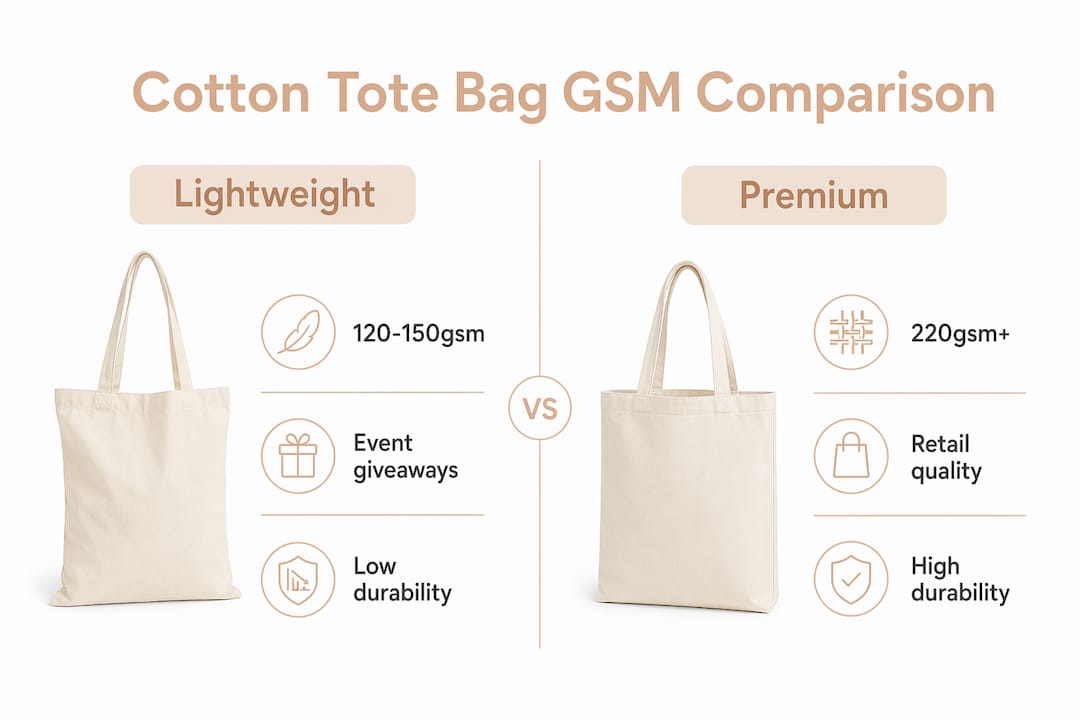
| GSM Range | Best Use | Durability | Perceived Value |
|---|---|---|---|
| 120–150gsm | Event giveaways, high-volume promos | Moderate | Budget |
| 180–200gsm | General retail, everyday carry | Good | Mid-range |
| 220gsm+ | Retail packaging, corporate gifts | High | Premium |
Stitching quality matters as much as fabric weight. Reinforced box stitching at handle attachment points is the most critical construction detail. Without it, even a heavy-weight canvas bag will fail under load at the handle seams. Always ask suppliers specifically about handle stitching before ordering.
Handle length also affects usability. Short handles (around 11 inches) work for hand carry. Long handles (22 inches or more) allow shoulder carry, which most customers prefer for grocery and everyday use.
Pro Tip: Order a physical sample before committing to bulk. A sample lets you test handle strength, fabric feel, and print quality in person. The cost of one sample is far less than reprinting 500 bags.
What pricing and volume considerations should buyers keep in mind?
Order volume is the primary driver of unit cost for bulk cotton tote bags. The price per bag drops sharply as quantity increases, so buyers who can consolidate orders save significantly.
Wholesale pricing for custom cotton canvas tote bags scales with volume: $1.15 per unit at 100–499 units, dropping to $0.63 per unit at 5,000 or more units. That difference adds up fast. An order of 5,000 bags at the lower price saves over $2,600 compared to ordering the same quantity at the 100-unit rate.
| Order Volume | Approximate Unit Price | Typical Lead Time |
|---|---|---|
| 50–99 units | $1.40–$1.60 | 4–7 days (express) |
| 100–499 units | $1.15 | 7–10 days |
| 500–4,999 units | $0.80–$1.00 | 10–15 days |
| 5,000+ units | $0.63 | 12–15 days |
Production lead times range from 4 days for express orders to 15 days for larger corporate runs. Most suppliers require a 50-unit MOQ for logo printing. Express options exist but typically carry a price premium and limit customization choices.
The tradeoff between cost and quality is real. Budget bags at 120gsm cost less per unit but generate fewer repeat uses and less brand exposure over time. A premium 220gsm bag costs more upfront but gets used daily for months, giving your logo far more impressions per dollar spent.
Always request a digital proof before production starts. Digital proofs validate design placement and color fidelity on cotton surfaces, reducing costly reprints. Most reputable suppliers include this step at no extra charge.
How to select the right custom cotton tote bag for your brand or event?
Choosing the right personalized cotton tote comes down to matching four variables: print area, fabric weight, bag size, and eco certification. Here is a practical process.
-
Define your design first. A complex multicolor logo needs DTF printing and a bag with a large flat print area. A single-color wordmark works perfectly with screen printing on any bag size. Knowing your design requirements narrows your options immediately.
-
Match GSM to your use case. Giveaway bags for a trade show can be 150gsm. Bags sold in a retail store or given as client gifts should be 220gsm or heavier. The weight signals quality before the recipient even looks at the logo.
-
Choose the right bag size. A 10x12-inch bag suits small retail items and branded gifts. A 14x16-inch or larger bag handles grocery shopping and everyday carry. Size affects perceived value and practical utility.
-
Prioritize GRS certification for eco claims. GRS certification is the industry standard for verified eco credentials. It signals verified recycled content rather than a generic “eco-friendly” label. Buyers who care about sustainability will notice the difference, and so will their customers.
-
Check handle length and stitching specs. Ask for the handle drop measurement and confirm that the supplier uses reinforced box stitching at attachment points. This one detail separates bags that last years from bags that fail after a few uses.
For events specifically, order at least 10–15% more units than you expect to need. Running short at a trade show or product launch is a missed branding opportunity that cannot be recovered.
Key Takeaways
Custom cotton tote bags deliver the best return on investment when fabric weight, print method, and eco certification are matched to the specific use case before ordering.
| Point | Details |
|---|---|
| Match GSM to purpose | Use 150gsm for giveaways and 220gsm for retail or corporate gifting. |
| Choose print method by design | Screen printing suits single-color logos; DTF handles multicolor artwork. |
| Verify eco credentials | GRS certification confirms real sustainability claims, not just marketing language. |
| Request a digital proof | Proofs catch alignment and color errors before bulk production starts. |
| Volume drives unit cost | Ordering 5,000+ units can cut per-unit cost nearly in half versus smaller runs. |
What I’ve learned from watching brands get tote bags wrong
The most common mistake I see is treating the tote bag as an afterthought. A brand spends weeks on logo design and then orders the cheapest 120gsm bag available. The bag tears at the handle after three uses. The logo fades after one wash. The brand impression that bag leaves is the opposite of what was intended.
The second mistake is ignoring GSM entirely. Ignoring cotton weight is a consistent source of customer dissatisfaction. A bag that feels flimsy in hand communicates that the brand behind it cut corners. A 220gsm bag that holds its shape and carries a full load of groceries communicates the opposite.
The sustainability angle is also frequently mishandled. Printing “eco-friendly” on a bag without GRS certification is a claim that informed buyers now recognize as hollow. The certification matters. Consumers in 2026 check.
My honest recommendation: spend the extra $0.30–$0.50 per unit on a heavier bag with verified stitching and a proper eco certification. The total cost difference on a 500-unit order is modest. The difference in brand perception is not.
— Blooomit
Custom branded bags and accessories at Blooomit
Blooomit offers custom streetwear and branded accessories built for businesses and consumers who want quality without compromise. The custom shopping collection includes options suited for branded gifting, promotional events, and everyday carry. Every order comes with design support and a proof before production.
For buyers who want to round out a branded accessory set, the B.Drawstring Bag pairs well with cotton totes for event kits and retail bundles. Blooomit keeps ordering straightforward: choose your product, submit your design, and confirm your proof. No guesswork on fit or finish.
FAQ
What is the best GSM for custom cotton tote bags?
220gsm is the premium standard for retail and corporate gifting. Lighter weights like 150gsm work for high-volume event giveaways where cost per unit is the priority.
What print method works best for logo tote bags?
Screen printing is best for single-color or two-color logos in bulk. Direct-to-film (DTF) suits multicolor or detailed artwork, though the imprint area is limited to roughly 6x3.5 inches.
How many units do I need to order for custom printing?
Most suppliers require a minimum of 50 units for logo printing. Larger orders of 500 or more units unlock significantly lower per-unit pricing.
What does GRS certification mean for eco-friendly tote bags?
GRS (Global Recycled Standard) certification verifies that a product contains genuine recycled content. It is the industry benchmark for sustainable claims and distinguishes verified eco products from unverified marketing labels.
How long does it take to produce custom cotton tote bags?
Production lead times run from 4 days for express orders to 15 days for large corporate runs. Always confirm lead time with your supplier and factor in shipping time when planning for events.