
Durable hoodies are defined as garments engineered with heavyweight fabrics, reinforced stitching, and quality construction to withstand frequent, rigorous wear without losing shape or comfort. The standard measure of fabric durability is GSM (grams per square meter), where midweight hoodies range from 270–340 GSM and heavyweight options start at 350 GSM and climb to 490 GSM. That weight difference is not cosmetic. Heavier fabric resists pilling, holds structure after repeated washing, and provides wind protection that lighter fleece cannot match. Knowing these numbers before you buy is the single most useful filter for finding a long-lasting sweatshirt.
What materials and construction make durable hoodies last?
Fabric weight is the first thing to check, but construction quality determines whether that fabric survives daily use. A 400 GSM hoodie sewn with low-grade thread will fail at the seams long before the fabric wears out.

Fabric weight and fiber content
Heavyweight fabrics starting at 350 GSM offer wind protection and structural integrity that midweight options cannot. Midweight fabrics in the 270–340 GSM range balance softness with year-round utility, making them a practical choice for everyday wear. Pure cotton feels great but stretches and shrinks more than blends. Cotton-polyester blends, typically 80/20 or 60/40, resist shrinkage, dry faster, and hold their shape through more wash cycles.
Cotton terry fabric, a loop-knit construction inspired by 1930s workwear standards, remains one of the most durable base materials available today. Pre-shrunk cotton terry holds its fit after repeated washing, which is why it appears in high-quality hoodies across multiple price points. Fabric that has not been pre-shrunk will distort after the first few washes, regardless of how well it is sewn.
Stitching and seam construction
- Flatlock stitching lays seams flat against the fabric instead of folding them over. This reduces friction points that cause wear and prevents the raised seam lines that irritate skin during active use.
- Triple-stitched seams add a third row of thread at high-stress points like underarms and side seams. Each additional row multiplies the force required to split the seam.
- Bartack stitching reinforces pocket corners and zipper bases with a dense cluster of stitches. Without it, these areas tear within months of regular use.
- Thread quality matters as much as stitch type. Low-grade thread breaks down with UV exposure and repeated washing, causing seams to unravel even when the fabric is intact.
Zipper and hood construction
YKK zippers and multi-piece hood construction are the two most overlooked durability factors in a hoodie. Zippers and hood seams are the first components to fail under daily use. YKK two-way zippers use a self-locking mechanism that resists accidental opening and tolerates thousands of cycles without the slider loosening. A three-piece hood design, where the hood is cut from three separate panels rather than one folded piece, holds its shape across the crown and retains heat more effectively.
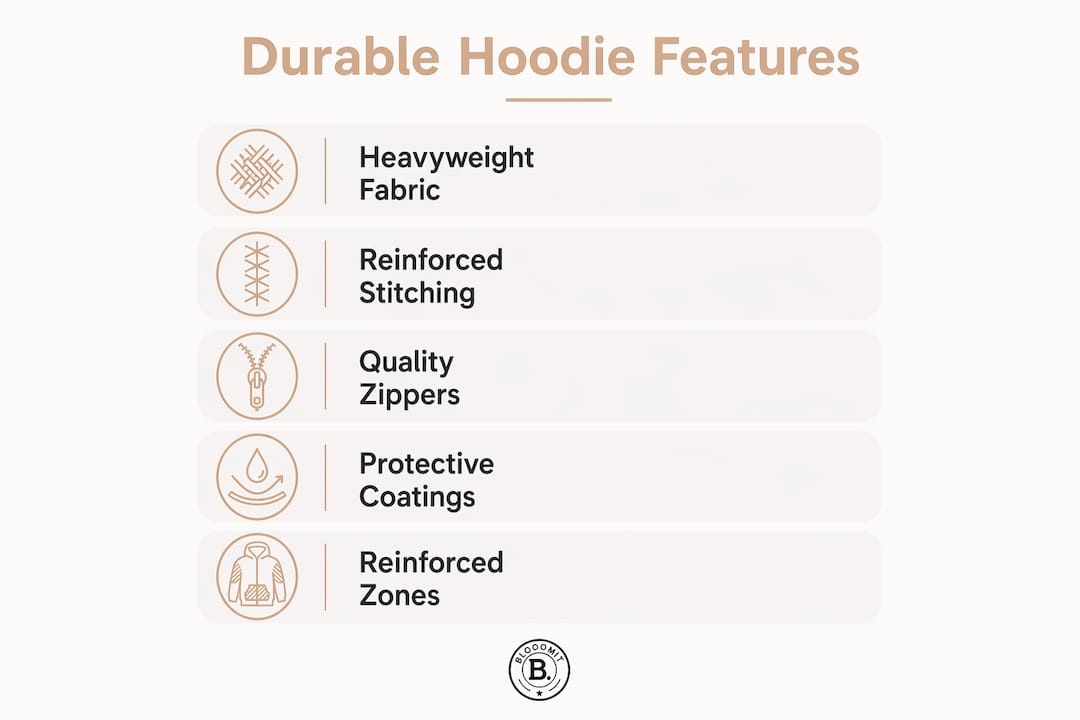
Pro Tip: Run the zipper from bottom to top and back five times before buying. A quality zipper moves smoothly with no catching. A zipper that snags in a store will fail within weeks of regular use.
How do functional features enhance hoodie performance and resilience?
Construction techniques build the foundation, but specific design features determine how a hoodie performs under real conditions. These additions separate a garment that lasts one season from one that lasts five years.
Protective coatings and reinforced zones
Durable Water Repellent (DWR) coatings cause water to bead and roll off the outer fabric surface rather than soaking in. DWR-treated heavy cotton blends perform well in light rain and heavy use, making them practical for outdoor activities without requiring a separate shell layer. DWR does not make a hoodie waterproof, but it extends the window before the fabric becomes saturated in wet conditions.
Reinforced high-stress zones add meaningful life to a garment. Bartack stitching at pocket openings, cuff seams, and zipper bases prevents the tearing that starts at stress points. Heavyweight ribbing at cuffs and waistbands holds its elasticity longer than standard ribbing, reduces ride-up during movement, and maintains the hoodie’s silhouette after repeated stretching.
Feature comparison by use case
| Feature | What it does | Best for |
|---|---|---|
| DWR coating | Repels light moisture | Outdoor and travel use |
| Bartack stitching | Reinforces stress points | Workwear and active use |
| Heavyweight ribbing | Holds shape at cuffs and hem | Daily wear and layering |
| Extended length | Covers the lower back during movement | Active and outdoor use |
| Hidden zip pockets | Secures items without bulk | Travel and commuting |
Extended length cuts prevent the lower back from being exposed when you reach or bend, a practical feature for anyone who wears hoodies during physical activity. Hidden pockets with secure closures add utility without compromising the garment’s structure. Adjustable drawcords with metal or reinforced tips outlast plastic tips, which crack and fray within a season.
What maintenance practices extend the life of a quality hoodie?
Even the best construction degrades with poor care. Improper washing and drying significantly shortens garment lifespan regardless of initial fabric quality. The right care routine costs nothing and adds years to a hoodie’s functional life.
- Wash in cold water. Hot water breaks down cotton fibers and elastic in ribbing faster than cold water. Cold washing also reduces color fading, which keeps the hoodie looking newer longer.
- Turn the hoodie inside out before washing. This protects the outer surface from abrasion against other garments in the drum. It also reduces pilling on the face fabric.
- Use a gentle cycle. High-agitation cycles stress seams and stretch fabric. A gentle or delicate cycle delivers enough cleaning action without the mechanical wear.
- Air dry when possible. High heat in a dryer is the fastest way to shrink cotton, degrade elastic, and cause pilling. Lay the hoodie flat or hang it on a wide hanger to preserve its shape.
- Limit washing frequency. Washing after every single wear is unnecessary for a hoodie worn over other clothing. Avoiding over-washing prevents pilling and fabric degradation that accumulates with each cycle. Spot clean minor marks between full washes.
- Store flat or folded, not compressed. Hanging a heavy hoodie on a thin wire hanger stretches the shoulder seams over time. Fold it and store it on a shelf, or use a wide, padded hanger.
Pro Tip: Zip all zippers fully before washing. An open zipper snags on other fabrics in the drum, pulling threads and creating small tears that grow with each subsequent wash.
How to choose the right durable hoodie for your lifestyle
The best hoodie for you depends on how and where you wear it. Matching fabric weight and construction to your actual use case prevents buying a garment that is either too heavy for daily comfort or too light for the conditions you face.
Matching weight to use case
- Workwear and outdoor use: Choose a heavyweight option at 350 GSM or above. Bartack stitching and heavyweight ribbing add structural durability suited for physical work and active outdoor conditions. Extended length and secure pockets increase utility on the job.
- Travel and commuting: A midweight hoodie in the 270–340 GSM range packs smaller and adapts to varying temperatures. Look for DWR coating and hidden zip pockets for practical protection on the move.
- Casual everyday wear: A cotton-polyester blend in the midweight range offers the best balance of softness, shape retention, and ease of care. Pre-shrunk fabric is non-negotiable for a garment worn this frequently.
- Layering in cold weather: A heavyweight hoodie with a three-piece hood and flatlock seams works well under a shell jacket. The flat seams prevent pressure points, and the structured hood fits under an outer hood without bunching.
Customization and fit considerations
Vertically integrated manufacturers control fabric sourcing and sewing in the same facility, which produces consistent stitch density and fabric quality across every unit. This matters most when ordering custom or personalized hoodies, where inconsistent production leads to garments that vary in weight and construction from one order to the next. Print-on-demand services with fragmented supply chains often cannot guarantee the same fabric weight or seam quality between orders.
Fit affects durability in a practical way. A hoodie that is too tight across the shoulders places constant tension on the shoulder seams, accelerating wear at those points. A relaxed fit distributes stress more evenly across the fabric. Check that the sleeve length reaches the wrist without pulling when your arms are extended, and that the body length covers your waistband during movement.
High-quality custom hoodies built with these specifications give you the option to personalize without sacrificing the construction standards that make a garment last.
Key Takeaways
Durable hoodies require heavyweight fabric, reinforced construction, and proper care to deliver lasting comfort and value across years of regular wear.
| Point | Details |
|---|---|
| Fabric weight drives durability | Choose 350 GSM or above for heavy use; 270–340 GSM for everyday and travel wear. |
| Construction details matter most | Flatlock seams, bartack stitching, and YKK zippers prevent the failures that end a hoodie’s life early. |
| DWR and ribbing add real function | DWR coating handles light moisture; heavyweight ribbing holds shape and reduces ride-up over time. |
| Care routine extends lifespan | Cold water, gentle cycles, and air drying preserve fabric and seams far longer than standard machine drying. |
| Fit and sourcing affect longevity | A relaxed fit reduces seam stress; vertically integrated production ensures consistent fabric and stitch quality. |
What daily use actually teaches you about hoodie quality
Gear testing under real conditions reveals something that spec sheets do not. Daily rigorous use from travel to outdoor activity exposes construction flaws within 6 months. That timeline is the honest benchmark. A hoodie that looks fine on a hanger but fails at the zipper base or hood seam by month four was never built to last.
The factors most buyers overlook are zipper quality and hood construction. Most people focus on fabric feel in the store and ignore the zipper entirely. A cheap zipper slider loosens after a few hundred cycles, and once it stops locking, the zipper is effectively broken. Replacing a zipper costs more in time than the savings from buying a cheaper garment.
Hood construction is the other underrated factor. A single-piece folded hood loses its shape quickly because the fabric at the crown is cut on the bias, which stretches unevenly. A three-piece hood holds its form because each panel is cut on the grain. This is a detail you can see by looking at the seam lines running over the top of the hood.
The cost-per-wear argument for quality hoodies is straightforward. A well-built heavyweight hoodie worn three times a week for three years costs far less per wear than a cheaper garment replaced every season. Durable hoodies are best understood as investment pieces built for reliability, not as seasonal fashion items. That framing changes how you shop and what you prioritize at the point of purchase.
Custom durable hoodies from BLOOOMIT
BLOOOMIT offers made-to-order hoodies and apparel built with the construction standards covered in this article.
Fabric weight, seam type, and fit are all selectable when you order through BLOOOMIT’s custom apparel catalog. The production process uses vertically integrated quality control, which means consistent fabric weight and stitch density across every order. Customers who want personalized style without sacrificing garment longevity can browse the full selection at BLOOOMIT. Options include heavyweight and midweight builds suited for workwear, travel, and everyday use. Each piece is made to order, so you get the fit and specifications that match your actual needs.
FAQ
What fabric weight is best for a durable hoodie?
Heavyweight fabrics starting at 350 GSM offer the best durability for frequent wear, while midweight fabrics in the 270–340 GSM range balance softness and everyday utility.
What stitching type makes a hoodie last longer?
Flatlock seams and bartack stitching at stress points are the most effective construction techniques for extending hoodie lifespan. Triple-stitched seams at underarms and side panels add additional resistance to tearing.
How often should you wash a durable hoodie?
Washing after every two to three wears is sufficient for a hoodie worn over other clothing. Over-washing accelerates pilling and fabric degradation even in high-quality garments.
Are custom hoodies as durable as standard ones?
Custom hoodies from vertically integrated manufacturers match or exceed the durability of standard retail options. Fragmented print-on-demand production often results in inconsistent fabric weight and stitch quality between orders.
What is DWR coating on a hoodie?
DWR stands for Durable Water Repellent, a finish applied to outer fabric that causes water to bead and roll off rather than soak in. It extends performance in light rain without making the hoodie fully waterproof.